Berry Street Burial Ground Project
This burial record database reflects ongoing research based on death certificates, obituaries, archival sources, and community testimony. Records may change as research continues. Please let us know of any needed changes or additions.
Thank you!
Copyright and Citation
© 2026 Kelly Marie Miles Pratt.
This work is intended to support research, education, and public understanding of cultural heritage. You are welcome to cite and reference this thesis in accordance with standard academic practice. If you share or reference this work, please provide appropriate attribution and include a link to the official version on ProQuest or the author's website whenever possible.
Please do not reproduce or distribute the complete thesis for commercial purposes without the author's written permission.
Project Background
The Berry Street burial ground (a.k.a. Arlington Heights Cemetery) is a historic African American burial ground in Hopewell, Virginia. Community knowledge combined with archival information suggests the was active from the early 1920s through the 1960s. Once-marked graves, some identified with cinderblocks, are now unmarked, leaving only visible depressions. The site lacks official documentation, putting it at risk of being forgotten or disturbed as nearby wooded land is developed.
The project began with deed research focused on Deacon John Parham, a key figure associated with burials in the area, and has expanded to include historic maps, newspapers, death certificates, literature, and community testimony. After 5 months, one part of the burial ground has been discovered, community members have learned of older siblings who died at childbirth and who are buried in the burial ground, and the funeral homes and churches associated with the burial ground have been identified.
Progress Since June 2025
The following accomplishments have taken place since the project began in June of 2025:
Archival Research: Investigated 40+ land plats, historic maps, local newspapers, thousands of death certificates, and local literature to uncover references to burials and community members. Located 61 death certificates and/or obituaries potentially linked to the burial ground.
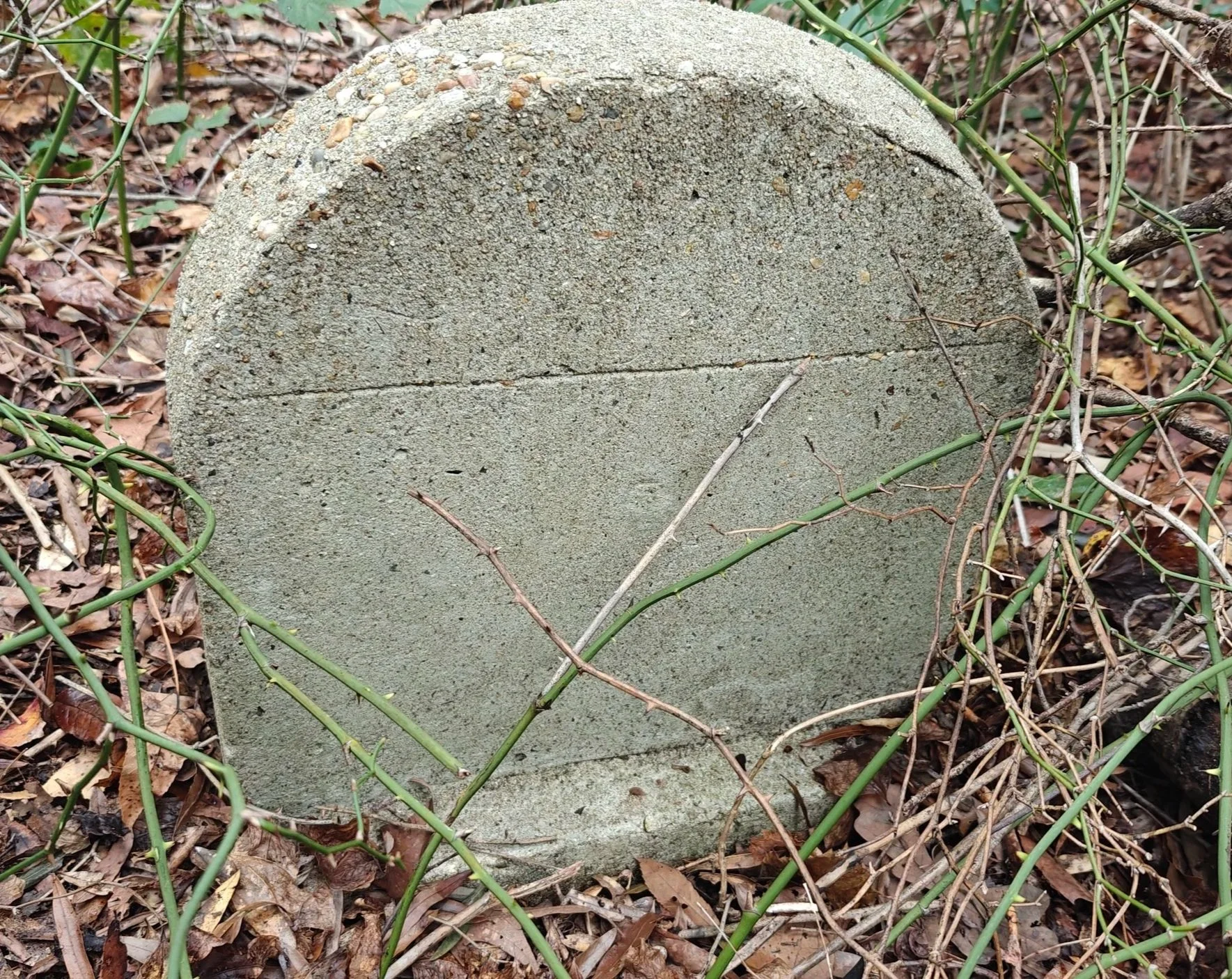
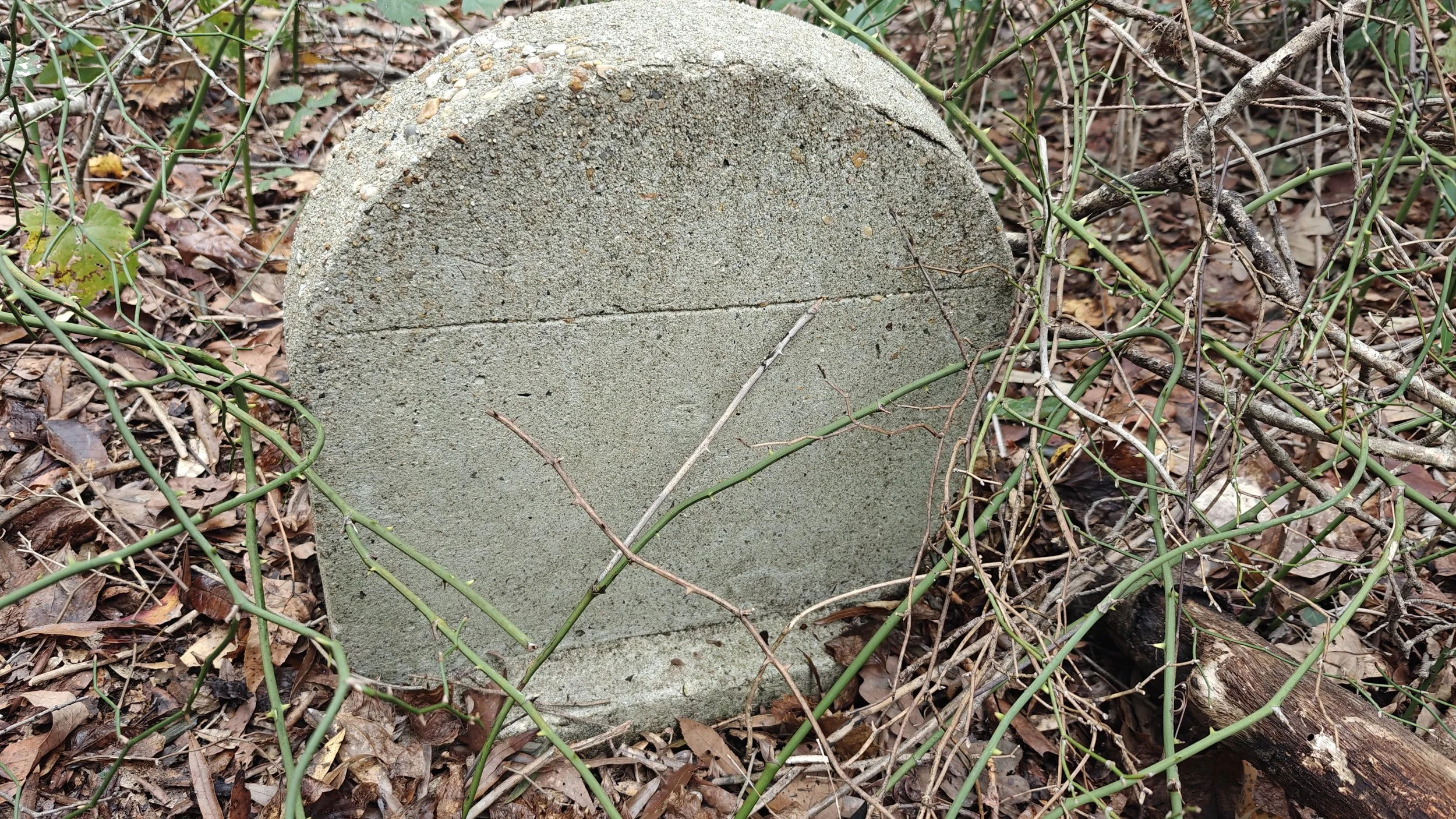
Uncarved, handmade, cement headstone found in the burial ground. This is the only standing and visible headstone. Picture courtesy of Kelly Pratt.
Community Engagement: Attended 5 community events, including the weekly Hopewell Farmers Market and the River and Roads Festival. Hosted 2 community engagement events. The first was a genealogy workshop led by Viola Baskerville, president of the Afro-American Historical and Genealogical Society. The second was a Community Meeting led by the researcher, Kelly Pratt, which provided an overview of the Berry Street Burial Ground Project, and allowed a chance for comment and feedback. Efforts reached more than 115 community members, 31 churches, and 15 descendants.
Collaboration: Established communication with the Virginia Department of Historic Resources, local churches, and regional historians. New leads suggest possible connections to Central State Hospital burials in Petersburg. This is still being investigated.
Why This Matters
The Berry Street burial ground is not just a local story. It is a vital part of African American history in Hopewell. Only the African American residents of Arlington Heights from 1920-1960 have first-hand knowledge of its existence and many of their family members are buried there. Those with living memory of the site are 70-90 years old. Their stories will soon be lost to time. The burial ground is threatened by development and vandalism and part of it may already be disturbed by homes built in the 1960s-1970s. Documenting and safeguarding the burial ground preserves family connections, ensures community voices are heard, and safeguards the memory of those buried there.
Potential Pre-Development Considerations for the Berry Street Burial Ground Area
(For City Review and Discussion)
The following steps are presented for City consideration prior to approving new development within or adjacent to the Berry Street Burial Ground. These actions reflect guidance from the local descendants and community members, Virginia Department of Historic Resources (DHR), discussions with City officials, and additional preservation planning considerations.
Require non-invasive investigation prior to development, including ground-penetrating radar (GPR) and GIS mapping, to identify known and potential burial locations within the proposed development areas.
Support coordinated site preparation and documentation, including controlled vegetation clearing, pedestrian survey by a qualified archaeologist, and post-clearing aerial photography conducted in collaboration with the City.
Establish procedures for archaeological monitoring, requiring a qualified archaeological monitor during ground-disturbing activities in areas of sensitivity.
Adopt clear protocols for inadvertent discoveries, including immediate stop work plans, notification of DHR, notification of descendants, and compliance with state laws if human remains or burial features are encountered.
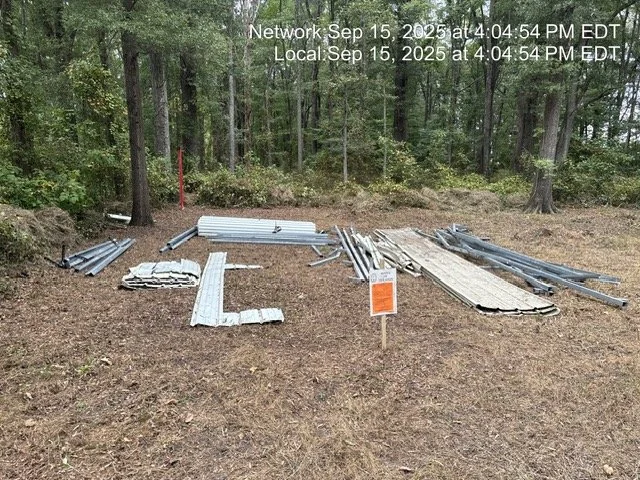
Private owners attempted to build in an area on the north side of Berry Street where another burial site is thought to be. The clearing activities could have removed field stones, cinderblocks or other indications of burials.
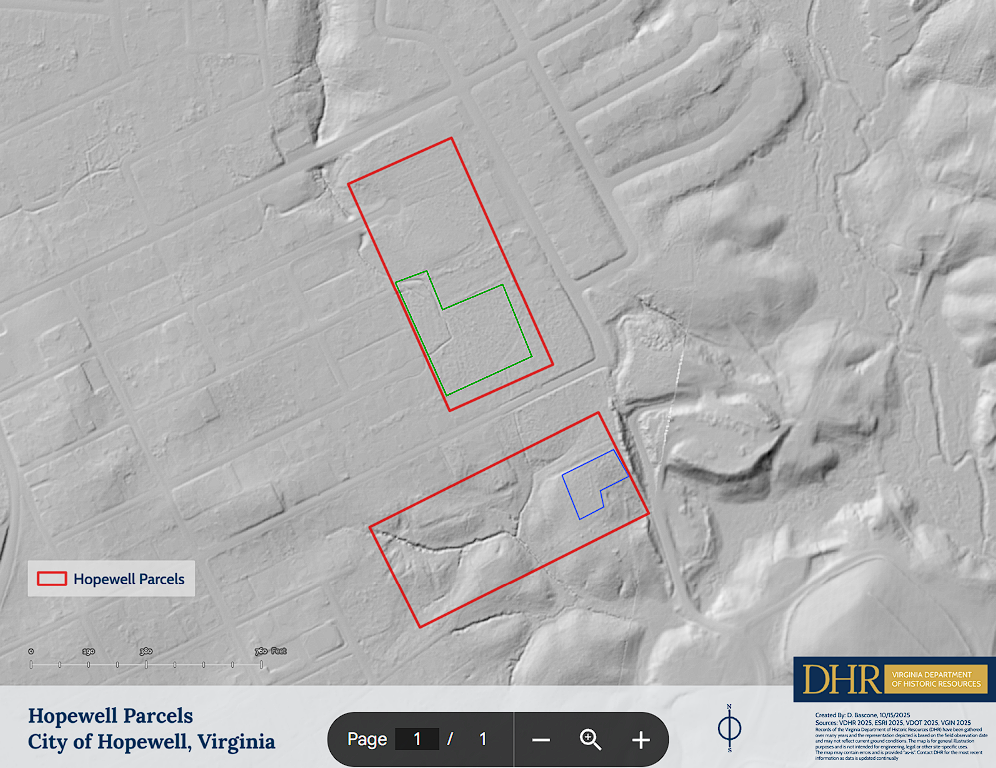
LiDAR map showing possible burial ground locations. These areas must be protected and systematically searched for burials. LiDAR Photo courtesy of DHR. Red boxes added by the researcher to highlight community memory of potential burials.
Provide transparency and communication mechanisms, including City notifications of intent to build, public notice, and a defined comment period prior to permit approval in areas associated with the burial ground.
Incorporate descendant consultation, allowing descendants to ask questions and, where appropriate, observe documentation or monitoring activities under City guidance.
Explore long-term planning tools, such as an overlay zoning district or other land-use mechanisms, to protect the burial ground and surrounding Arlington Heights neighborhood from unintended impacts.
Pursue formal recognition and planning integration including National Register of HIstoric Places listing and consideration of the Arlington Heights neighborhood as a historic district with the burial ground as a contributing cultural landmark.
Encourage partnership-based stewardship, involving the City, landowners, preservation professionals, volunteers trained in cemetery preservation, and descendant representatives.
Ongoing Research and Community Engagement
Research related to the Berry Street Burial Ground is ongoing and continues to evolve through archival work, genealogical investigation, and community collaboration. Current areas of focus include:
Archival and genealogical research, including continued review of death certificates, genealogical databases, and historic records associated with funeral homes connected to the site.
Institutional and contextual research, including further investigation into potential connections with Central State and other relevant local institutions.
Church and faith-based records research, such as membership lists, obituaries, burial practices, and historical documentation that may provide additional context for the burial ground.
Community and descendant organizing, with community members and descendants working toward the formation of a Friends of the Burial Ground group to support long-term care, advocacy, and protection.
Relationship-building and outreach, including collaboration with the City to help notify community members who may have ancestral or historical connections to the site.
Genealogical education and access, through the development of opportunities for community members to learn how to trace family histories and engage with available records.
Cemetery preservation training, providing guidance and training for local volunteers who may assist with site clearing and maintenance activities, conducted only with landowner permission and appropriate oversight.

Part of an article from The Hopewell News in 1961. This is one of the few public mentions of the burial ground near Berry Street. Photo Credit: Hopewell News, Volume 35, Number 83, 26 April 1961
Get Involved
If you want to help with research, volunteer for events, or join the Friends of the Burial Ground, contact Kelly Miles Pratt at kmpratt@umd.edu. If you think you might be a descendant of the burial ground, please call or text Kelly at 804-446-1664.
About the Researcher
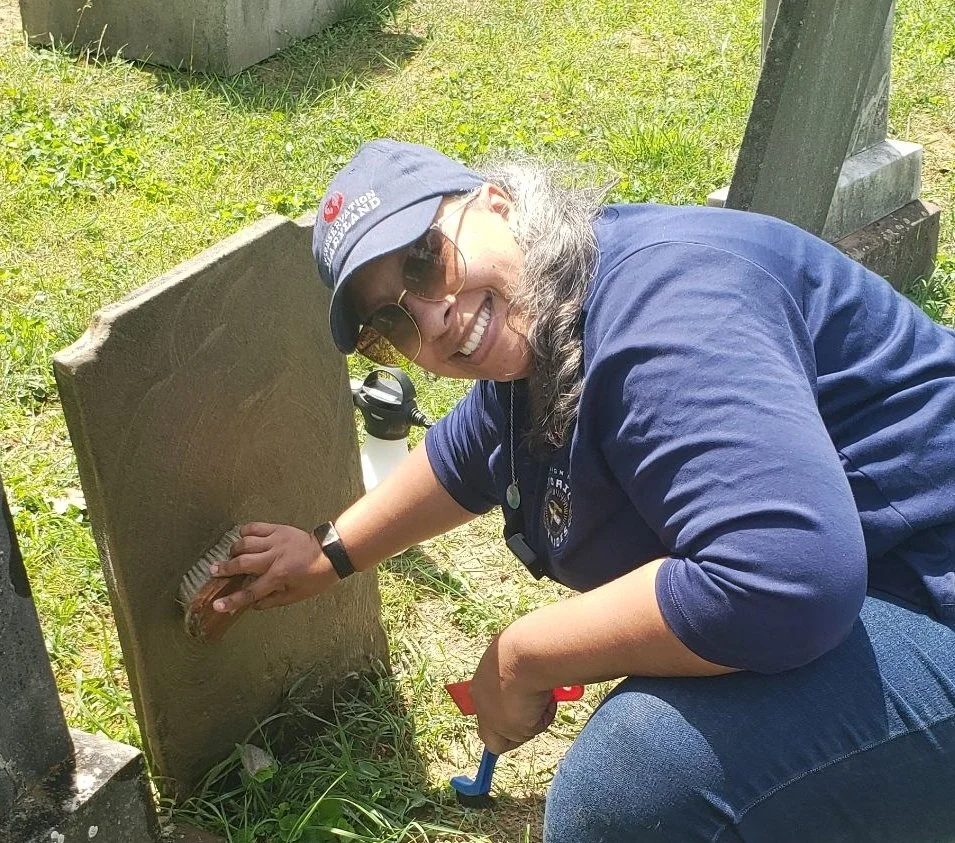
Kelly (Miles) Pratt completed their Master’s degree in the Cultural and Heritage Resource Management program at the University of Maryland in 2026. With a background in public archaeology, community research, project management, and historic trades training, Kelly’s work centers on documenting burial grounds, engaging descendants, and developing preservation strategies. Her personal interest in Berry Street stems from both academic research and a deep commitment to community-driven heritage work.